Defensible space is the managed area around a home where vegetation and other combustible materials are arranged to reduce wildfire exposure. It is not a guarantee that a structure will survive, and it does not replace evacuation guidance or building protections. The work is best approached in layers, starting closest to the house and extending outward. Those layers help homeowners decide which tasks are most urgent and how upkeep can fit into the rest of the property.
How defensible space can slow fire and reduce heat exposure
A well-maintained buffer can reduce the amount of fuel immediately next to a structure and interrupt the continuity of vegetation farther away. That can help limit direct flame contact and heat exposure, though wind-driven embers can still travel beyond a cleared area. The goal is to make it harder for fire to move from plant to plant or from stored materials to the home. Defensible space may also give firefighters a safer area to work when conditions allow them to respond.
What the 0–5-foot, 5–30-foot, and 30–100-foot zones mean
The zones are practical planning ranges rather than universal boundaries. The 0–5-foot area next to a structure is commonly treated as the immediate zone, where combustible materials and debris deserve particular attention. From 5–30 feet, vegetation can be managed to reduce continuous fuel, while the 30–100-foot area may involve broader thinning and debris removal. Zone guidance for Truckee homes offers one local example of how recommendations can be organized across these distances; homeowners should confirm the applicable distances and actions where they live.
Why local climate, terrain, and regulations affect recommendations
A single spacing rule cannot fit every property. Dry summers, seasonal winds, steep slopes, local plant communities, and the density of nearby development all affect how fire may move through a landscape. Local codes and fire authority recommendations may also differ, including requirements for vegetation, access, or disposal. For that reason, a defensible space plan should use general principles as a starting point, then be adjusted to the site and local rules.
Assess your property before making changes
A brief, systematic survey can make wildfire preparation more manageable. Before cutting or removing plants, homeowners can note the house, outbuildings, driveways, slopes, and the vegetation linking them. This view helps distinguish a small cleanup task from a larger fuel-management concern. It also helps direct limited time toward changes that matter most near structures and access routes.
Map slopes, access routes, structures, and nearby vegetation
Walk the property and sketch its main features, including the home, sheds, fences, driveways, and areas where a slope rises toward a structure. Note where trees and shrubs form dense or connected patches, and where dry grass or brush meets buildings. Include gates and narrow passages that could affect access. A simple map need not be precise; its value is in showing how terrain, vegetation, and structures relate to one another.
Identify combustible materials close to the home
Look for leaves and needles on roofs, in gutters, and below decks, as well as firewood, bins, cushions, and stored equipment near walls. Check whether dry plants, bark mulch, or overhanging branches create a connection between landscape fuels and the building. These details are easy to overlook during ordinary yard work, but they can make the immediate area harder to maintain. Record them before moving items or changing the planting layout.
Prioritize hazards based on fire risk and available time
When time or help is limited, it is useful to rank tasks by proximity to the home, amount of combustible material, and the ease of addressing the hazard safely. Small actions near the structure can be completed while larger tree or slope work is planned. A short priority list can keep the effort focused:
- Clear loose debris from roofs, gutters, and areas beside the house.
- Move firewood and other stored combustibles farther from structures.
- Remove dead or dry vegetation that connects plants to buildings.
- Arrange qualified help for large trees or difficult terrain.
After the most immediate tasks are complete, the remaining work can be scheduled in stages rather than treated as one overwhelming project. Colorado’s wildfire preparation guidance also frames mitigation as ongoing work around the home and property. Local advice can help homeowners decide which steps should come first on a particular site.
Reduce ignition risks in the immediate zone
The area closest to a home calls for careful attention because embers and nearby combustible items can expose the structure to ignition. Keeping this zone orderly does not require removing every plant or turning the yard into bare ground. Instead, homeowners can reduce easy-to-ignite debris and avoid placing stored materials directly against walls. The most practical choices are those that can be maintained through the season.
Clear leaves, needles, and other debris from roofs and gutters
Dry leaves, needles, and small branches can collect on roofs, in gutters, and in roof valleys. Remove this material regularly, using safe access practices and help where roof work is beyond a homeowner’s ability. Check again after windy weather or when nearby trees shed heavily. Routine debris removal is a simple task, but it works best when treated as recurring upkeep rather than a one-time cleanup.
Move firewood, outdoor furniture, and stored items away from walls
Firewood stacks, cushions, cardboard, and other combustible items can give embers or nearby flames additional material to ignite. Store firewood away from the home and keep outdoor items that are not in use from accumulating beside walls or under eaves. Where possible, maintain clear space around the structure and avoid storing items beneath decks. The exact placement should also account for access, weather exposure, and local requirements.
Use noncombustible materials next to the home where practical
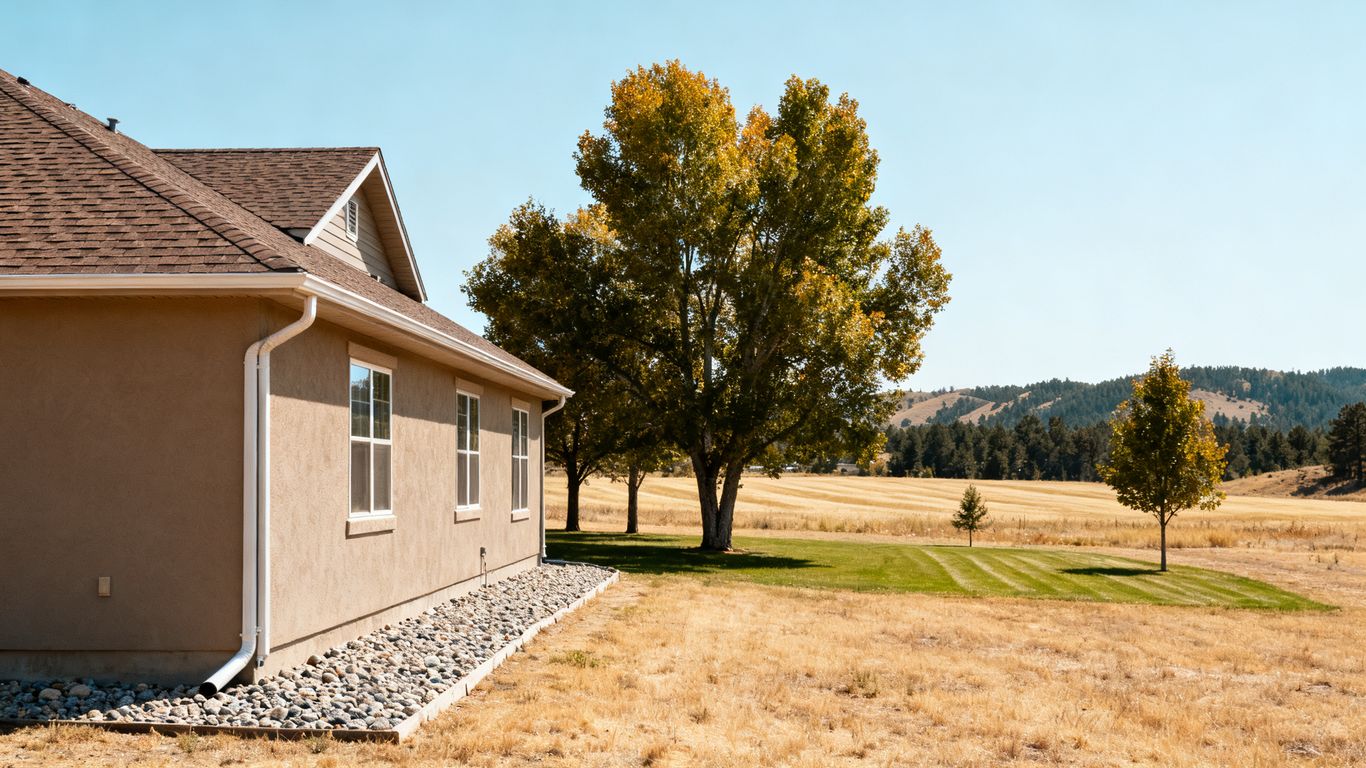
A strip of gravel, stone, or paving next to the structure can reduce the amount of combustible material touching the building. Such materials are not a substitute for cleaning roofs or managing nearby plants, but they can make the immediate edge easier to keep clear. Existing paths, patios, and other hard surfaces may already serve this purpose. Consider drainage, accessibility, and the character of the site before changing landscaping.
Keep plants and mulch from creating a continuous path to the house
Plants and ground coverings close to the home should not form an uninterrupted bridge from surrounding vegetation to siding, decks, or other combustible parts of the structure. Remove dead growth, keep plantings maintained, and consider less combustible ground cover near walls. Oregon’s defensible space program provides an example of guidance that addresses the structure and surrounding zones. Local plant recommendations can help homeowners make choices that suit their climate and upkeep capacity.
Manage vegetation in the intermediate zone
Beyond the first few feet, the emphasis shifts toward how vegetation is arranged and maintained. The objective is not to eliminate a healthy landscape, but to reduce dense, continuous fuels and remove dry growth that can carry fire. Work should be guided by the property’s conditions, including the plants already present and how quickly they grow back. A thoughtful layout can preserve useful shade while making maintenance more realistic.
Space trees and shrubs to interrupt the spread of fire
Where tree crowns and shrubs form a connected mass, consider whether selective pruning or removal can create breaks in the vegetation. Spacing needs vary with plant type, slope, and local guidance, so a fixed distance should not be assumed to suit every yard. Pay attention to shrubs beneath tree branches, as well as plantings beside fences or outbuildings. The aim is to reduce connected fuel while retaining healthy trees and useful landscape features where possible.
Prune lower branches and remove dead or dying plants
Dead limbs and low branches can contribute to fire moving from ground vegetation into tree crowns. Remove dead or dying material and prune lower branches when appropriate for the species and the tree’s health. Avoid excessive pruning, which can stress a tree or create other maintenance problems. For large trees, work near power lines, or uncertain cuts, a qualified professional can help assess safe options.
Keep grass mowed and clear dry vegetation around structures
Dry grass and weeds can carry fire toward a building, particularly when they meet shrubs, fences, or stored items. Keep grass maintained during the season when it dries, and remove accumulated dead vegetation around structures and other combustible features. Mowing and cleanup schedules should reflect local growth and fire-weather conditions rather than a single calendar date. Regular checks can catch regrowth before it becomes a larger task.
Choose and group plants with fire behavior and maintenance in mind
No plant is entirely fireproof, and a plant’s condition and placement matter alongside its type. Homeowners can favor plants that are suited to local conditions and manageable with the time and water available. Groupings should leave room for maintenance and avoid dense connections to structures or other vegetation. A landscape plan that can be kept healthy and tidy is generally more practical than one that depends on constant intensive work.
Reduce fuel and manage trees farther from the home
The outer area can help limit the amount and continuity of fuel approaching a structure, especially where brush or trees are dense. Work here is often more extensive than immediate-zone cleanup and may require planning, equipment, or professional assistance. The purpose is not to clear every tree, but to reduce dead material and manage vegetation in a way that suits the land. Terrain and property boundaries should be considered before work begins.
Remove dead trees and accumulated woody debris
Dead trees, fallen limbs, and piles of woody debris can add fuel to the landscape. Identify material that is dead, unstable, or accumulated beneath trees, then determine how it can be removed or safely managed under local rules. Large trees may require an arborist or qualified tree crew, particularly where they could fall on a building or access route. A careful assessment can distinguish urgent hazards from material that can remain as part of a healthy landscape.
Thin dense vegetation while preserving healthy trees
Selective thinning can reduce overly dense growth without clearing the site. Retain healthy trees where appropriate and consider how shrubs, saplings, and dead branches contribute to connected fuel. Avoid creating piles of slash that are left unmanaged after cutting. Since thinning affects shade, soil, and future growth, it is often worth planning the work with a local fire professional, forester, or qualified contractor.
Maintain separation between tree crowns and structures
Branches that touch roofs or hang close to structures deserve attention, as do trees whose crowns crowd one another. Prune or remove vegetation only where it can be done safely and in line with local guidance. Maintain clearance around chimneys and other heat sources according to applicable recommendations. Work near a building can be deceptively complex, so large or hazardous branches are best handled by qualified help.
Adapt fuel reduction to slopes and prevailing winds
Fire can move differently uphill than across level ground, and wind can carry embers well beyond managed areas. A slope rising toward a house may call for more careful attention to continuous brush and accumulated debris. Prevailing winds and local patterns can also help identify where vegetation is most likely to carry fire toward structures. These conditions make site-specific advice especially useful; a general zone diagram cannot account for every property.
Prepare a maintenance plan before wildfire season
Defensible space changes over time as plants grow, weather moves debris, and stored items shift around a property. A maintenance plan turns one round of cleanup into repeatable tasks that can be handled before the period of greatest local risk. It can be as simple as a calendar reminder and a written list of areas to recheck. Regular upkeep also makes it easier to notice hazards early, before they require a larger effort.
Schedule cleanup around local seasonal conditions
Plan major cleanup for a time when vegetation and weather conditions allow safe work and disposal. The right timing varies by region: some areas have a dry season, while others have local restrictions on equipment or outdoor burning at certain times. Schedule work that needs a contractor well ahead of the busiest period. Local fire authorities can advise which seasonal conditions should guide the plan.
Recheck defensible space after storms and periods of plant growth
Storms can bring down limbs and leave debris in gutters or beneath trees, while a growing season can quickly fill cleared areas with grass and weeds. Revisit the property after such changes, with particular attention to roofs, access routes, and the immediate area around buildings. A brief repeat inspection often reveals tasks that were not present during the initial survey. Keep notes so recurring trouble spots receive attention each time.
Dispose of yard waste safely and follow local burning rules
Cutting and pruning can produce branches, leaves, and other yard waste that should not be left in unmanaged piles near structures. Disposal options vary, so check local collection services, transfer sites, and restrictions before moving or burning material. Outdoor burning may be limited or prohibited depending on location and conditions. Following those rules protects neighbors and helps prevent cleanup from creating a new fire hazard.
Confirm requirements with your fire department or local authorities
Before major clearing, burning, or changes near property lines, check with the local fire department or relevant authority. Requirements may address vegetation, access, disposal, or protected plants, and they can differ between neighboring communities. Ask whether a site visit or local assessment service is available. With that guidance, a homeowner can keep the plan practical, lawful, and suited to the property rather than relying on a generic checklist.