A roof does not need replacing simply because it leaks. Water can enter through a damaged flashing joint, an exposed fastener or a small section of missing shingles while the surrounding roof remains serviceable. The better decision begins with identifying where the water enters, whether the damage is isolated and how much of the existing roofing system can still perform reliably.
Northern New Jersey makes that distinction particularly important. Homes around North Haledon, Wayne, Paterson and Morristown experience winter snow, freezing temperatures, spring rain and occasional severe storms. Repeated melting and refreezing can expose weaknesses around roof edges and penetrations. Older homes may also have previous roofing layers, aging decking or attic ventilation arrangements that complicate otherwise straightforward repairs.
The lowest initial quote is not necessarily the least expensive solution. Repairing one damaged area makes sense when the underlying system is sound, whereas repeated leaks across several roof sections can make replacement more practical. A useful approach is to move through increasingly involved options and stop at the first one that adequately addresses the underlying problem.
For homeowners weighing those options, Titan Exterior Solutions provides roof inspection and roof repair services throughout northern New Jersey, including Bergen, Passaic, Morris and Essex counties. Its roofing services also include roof replacement, asphalt shingles and metal roofing, along with storm damage repairs and emergency roof tarping. Homeowners can request a roof inspection to determine which level of work their property needs.
Start With the Least Invasive Roofing Solution
Rung One: Inspect Before Removing Anything
What it fixes: An inspection does not repair the roof directly. It identifies the source and extent of damage before homeowners authorize unnecessary work.
What the roof is telling you: A ceiling stain might originate several feet away from the visible water mark. Water can travel along rafters, sheathing or flashing before appearing indoors. Inspectors should examine shingles, valleys, chimneys, pipe penetrations, roof edges and accessible attic areas.
In older North Jersey properties, inspection should also look for evidence of previous repairs, deteriorated sheathing and restricted attic airflow. A recently installed shingle surface does not automatically mean the underlying roof assembly is sound.
When to move up: When inspection confirms a specific defect rather than a general concern, a targeted repair becomes the next reasonable step.
Rung Two: Repair Small, Isolated Defects
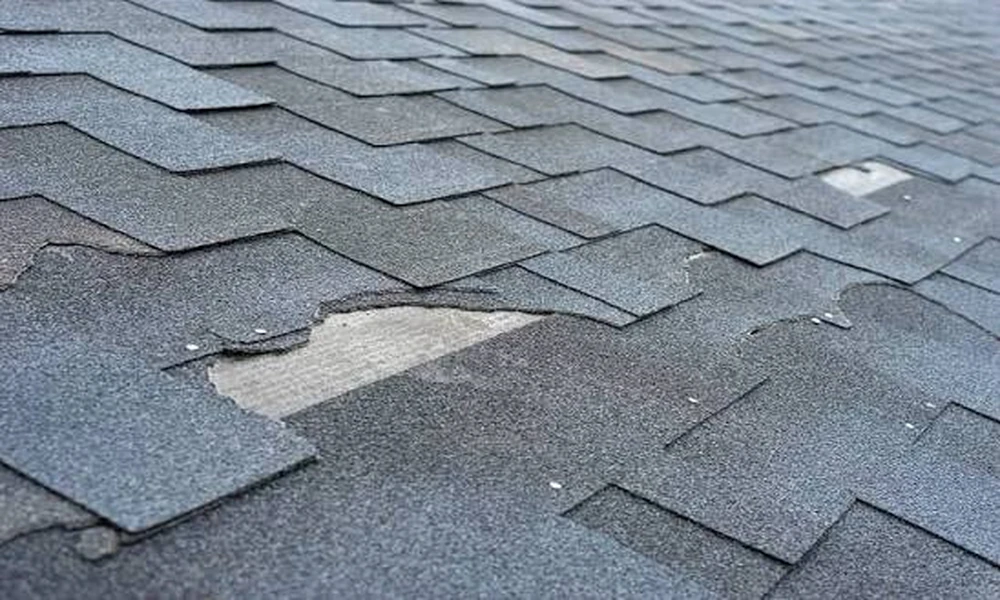
What it fixes: Minor repairs address limited damage such as a few displaced shingles, localized flashing defects or accessible penetrations that have lost their weather protection.
What the roof is telling you: If surrounding shingles remain flexible, securely attached and generally intact, replacing individual components may preserve the existing roof without disturbing serviceable sections.
Small leaks still deserve prompt attention. Water entering around a vent pipe can deteriorate the decking beneath it, turning a relatively contained repair into a larger project.
Emergency protection: After severe weather, temporary professional tarping can limit further water entry until permanent repairs are possible. A tarp is not a substitute for correcting damaged flashing, underlayment or roofing materials.
When to move up: If nearby shingles repeatedly loosen, flashing defects extend into adjoining materials or moisture has damaged the underlying decking, a broader repair may be necessary.
Rung Three: Repair Larger Damaged Areas
What it fixes: Larger repairs address concentrated deterioration involving several shingles, a roof valley, damaged underlayment or localized decking.
What the roof is telling you: Damage covering a continuous area often indicates more than one failed shingle. Wind may have disturbed multiple courses, or water may have penetrated beneath the visible surface.
Winter conditions complicate the diagnosis. According to the National Weather Service guidance on preventing roof ice dams, melting snow can refreeze near colder roof edges, allowing backed-up water to move beneath shingles. Repeated leakage near an eave therefore deserves an attic insulation and ventilation assessment, not simply another surface patch.
Repair versus replacement: A larger repair preserves more existing materials and usually involves less disruption than full replacement. However, it becomes less attractive when adjoining materials are too brittle or weathered to integrate with the repair properly.
When to move up: Consider replacing an entire roof section when deterioration extends beyond the original damage or dependable repairs would require disturbing much of the surrounding surface.
Rung Four: Replace One Roof Section
What it fixes: Partial replacement can address widespread damage restricted to a particular roof slope or clearly defined section while preserving unaffected areas.
What the roof is telling you: One slope may deteriorate faster because of sun exposure, prevailing wind, roof geometry or a previous installation problem. Different sections may also have been installed at different times.
Partial replacement is most practical when the damaged area has a distinct boundary and the remaining roof still has useful service life.
Material compatibility: New shingles may differ visibly from weathered shingles, even when their original colors match. More importantly, transitions between old and new assemblies must be properly detailed so they shed water.
When to move up: Full replacement deserves consideration when several slopes show similar deterioration, repairs continue recurring or the remaining sections are approaching the same failure conditions.
The Decision Ladder at a Glance
| Rung | What it fixes | When to move up |
|---|---|---|
| Inspection | Identifies leaks, damage and underlying defects | A specific repairable fault is confirmed |
| Minor repair | Isolated shingle or flashing damage | Damage extends beneath nearby materials |
| Larger repair | Concentrated roofing and decking deterioration | Surrounding materials cannot reliably support repairs |
| Partial replacement | A failing slope or defined roof section | Multiple sections show similar wear |
| Full replacement | Widespread roofing system deterioration | Choose an appropriate new roofing system |
Rung Five: Replace the Complete Roofing System
What it fixes: Full replacement addresses widespread material deterioration, repeated failures across multiple sections or roofing that can no longer provide dependable protection through localized repairs.
What the roof is telling you: Extensive granule loss, widespread cracking, recurring leaks and repeated storm damage may indicate that preserving the existing system is no longer economical. These conditions must be evaluated together rather than treating any single symptom as an automatic replacement trigger.
Asphalt shingles versus standing seam metal: Asphalt shingles generally provide a more accessible initial investment and fit the appearance of many established New Jersey neighborhoods. Standing seam metal typically requires greater upfront investment but offers concealed fasteners and a different approach to weather protection.
Metal roofing still depends on correct flashing, panel movement allowances, fastening and underlayment. Snow can also slide from smooth metal surfaces, making entrances, walkways and drainage locations important design considerations.
For either material, the University of Minnesota Extension’s research on ice dam prevention explains that reducing heat escaping into the attic is central to controlling roof temperature differences. Choosing a different roof covering alone does not resolve underlying heat loss.
When replacement is justified: The strongest case combines documented deterioration, limited remaining serviceability and a clear explanation of why smaller repairs cannot provide a reliable result. The replacement scope should address decking condition, ventilation, flashing, underlayment and drainage rather than shingles or panels alone.
A sensible roofing decision preserves usable materials without repeatedly spending money on a failing system. Starting with inspection and moving upward only when evidence supports the next level helps homeowners protect both their property and their roofing budget.